
NewsDetails
Technical Specifications and Material Standards for Power Line Hardware
author:Dachuan time:2026-03-25 10:42:57 Click:142
Technical Specifications and Material Standards for Power Line Hardware
Power line hardware refers to the mechanical and electrical accessories used in overhead transmission and distribution systems to support, connect, and protect conductors, insulators, and towers. These components must meet strict technical specifications and material standards to ensure system reliability, safety, and durability under various operating and environmental conditions.
1. Overview of Power Line Hardware
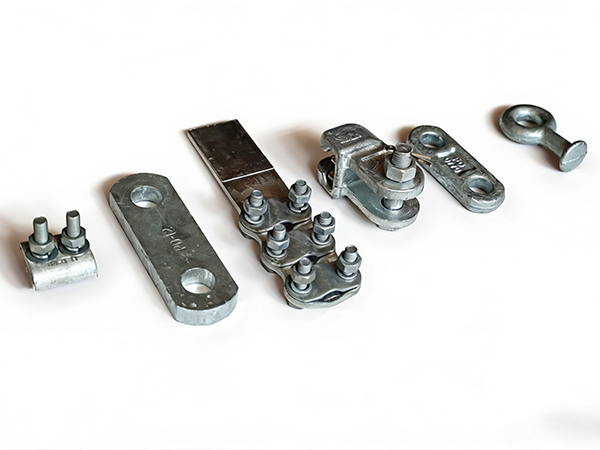
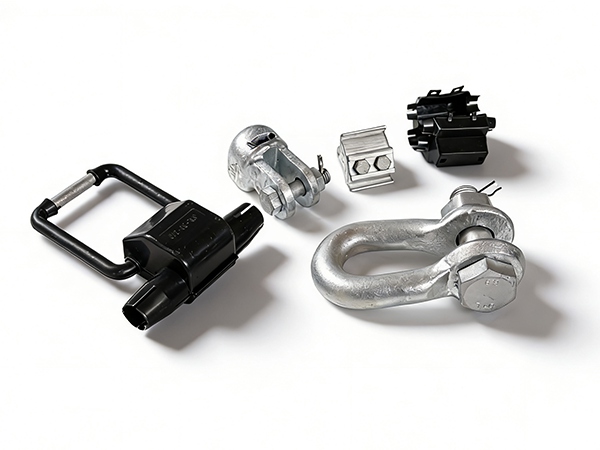
Power line hardware includes a wide range of components, such as:
Suspension and tension clamps
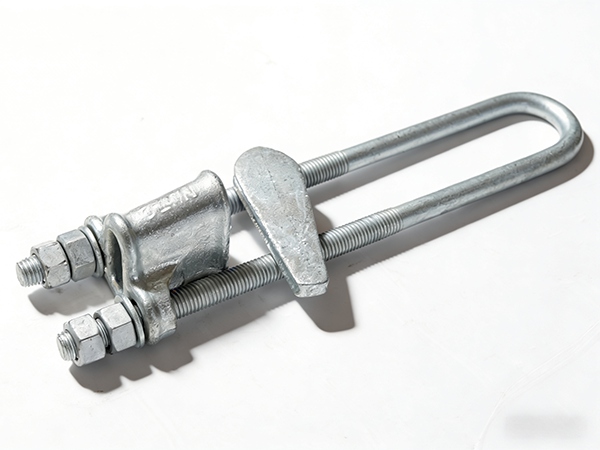
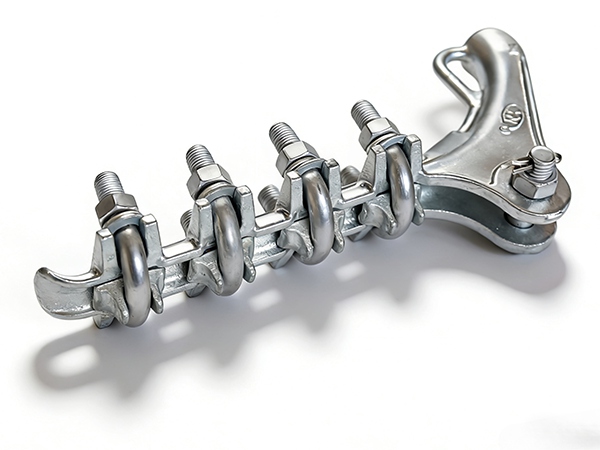
Dead-end fittings
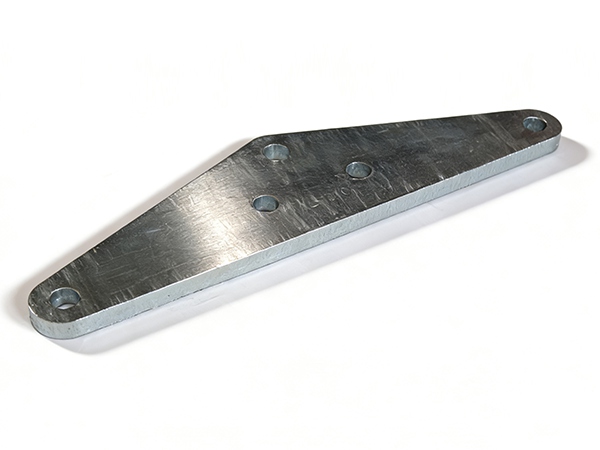
Shackles, clevises, and yoke plates
Spacers and vibration dampers
Bolts, nuts, and washers
Arcing horns and corona rings
These components work together to maintain mechanical integrity and electrical performance in overhead lines.
2. Key Technical Specifications
2.1 Mechanical Strength
Mechanical strength is one of the most critical parameters for power line hardware. Components must withstand:
Tensile loads from conductors
Wind pressure and dynamic forces
Ice loading in cold climates
Installation and maintenance stresses
Typical indicators include:
Ultimate Tensile Strength (UTS)
Safe Working Load (SWL)
Yield strength and fatigue resistance
All hardware must meet or exceed specified load ratings with appropriate safety factors.
2.2 Dimensional Accuracy and Tolerances
Precise dimensions are essential for compatibility and proper assembly:
Standardized sizes ensure interchangeability
Tight tolerances reduce stress concentration and misalignment
Proper fit between mating components prevents mechanical failure
Dimensional requirements are typically defined by international standards.
2.3 Surface Finish and Coating
Surface treatment plays a key role in corrosion resistance and durability:
Hot-dip galvanizing is the most common method
Zinc coating thickness must meet specified minimum values
Smooth, uniform coating prevents premature corrosion
Other coatings such as aluminum cladding or special anti-corrosion layers may be used in aggressive environments.
2.4 Electrical Performance
Although primarily mechanical, some hardware components influence electrical behavior:
Corona performance (especially for high-voltage systems)
Electrical conductivity for certain fittings
Resistance to arcing and discharge
Proper design minimizes energy losses and electromagnetic interference.
2.5 Fatigue and Vibration Resistance
Transmission lines are subject to continuous vibration due to wind (aeolian vibration, galloping):
Hardware must resist fatigue failure over long service periods
Components like dampers and spacers are designed to reduce vibration effects
Material selection and structural design are critical for fatigue life
3. Material Standards
3.1 Carbon Steel
Carbon steel is widely used for structural hardware components:
High strength and good machinability
Typically used for bolts, shackles, and fittings
Requires galvanization for corrosion protection
Common standards include ASTM A36, ASTM A394, and equivalent ISO standards.
3.2 Alloy Steel
Alloy steel provides enhanced mechanical properties:
Higher strength and toughness compared to carbon steel
Better fatigue and wear resistance
Used in critical load-bearing components
Heat treatment processes are often applied to achieve desired properties.
3.3 Stainless Steel
Stainless steel is used in corrosive environments:
Excellent corrosion resistance
Lower maintenance requirements
Higher cost compared to carbon steel
Grades such as 304 and 316 are commonly used depending on environmental conditions.
3.4 Aluminum and Aluminum Alloys
Aluminum is widely used for lightweight and conductive components:
Good electrical conductivity
Excellent corrosion resistance
Used in clamps, connectors, and spacers
Aluminum alloys such as 6061 and 6063 are common in power line applications.
3.5 Ductile Iron and Cast Steel
Used for heavy-duty fittings:
High strength and toughness
Suitable for complex shapes through casting
Often used in clevises, brackets, and large connectors
3.6 Composite Materials
Advanced composite materials are increasingly used:
Lightweight and corrosion-resistant
High strength-to-weight ratio
Used in specialized fittings and insulation-related hardware
4. Relevant Standards and Specifications
Power line hardware must comply with international and regional standards to ensure quality and compatibility:
IEC 61284 – Requirements and tests for fittings
ASTM standards for material properties and coatings
ISO standards for mechanical properties and testing
ANSI and IEEE standards for design and performance
BS (British Standards) for dimensional and material specifications
These standards define testing methods, acceptance criteria, and performance requirements.
5. Testing and Quality Control
5.1 Mechanical Testing
Tensile and load tests to verify strength
Fatigue testing for long-term durability
5.2 Coating and Corrosion Testing
Salt spray tests to evaluate corrosion resistance
Coating thickness measurement
5.3 Dimensional Inspection
Verification of size, tolerances, and fit
5.4 Non-Destructive Testing (NDT)
Ultrasonic or magnetic particle testing to detect internal defects
6. Environmental and Service Considerations
6.1 Corrosive Environments
Coastal and industrial areas require enhanced corrosion protection
Use of stainless steel or სპეციალური coatings is recommended
6.2 Temperature Variations
Materials must withstand thermal expansion and contraction
Avoid brittle fracture in low temperatures
6.3 Pollution and Contamination
Hardware must resist chemical and particulate contamination
Proper coating selection is essential
7. Selection Guidelines
When selecting power line hardware, consider:
Load requirements and safety factors
Compatibility with conductors and insulators
Environmental conditions (corrosion, temperature, pollution)
Compliance with relevant standards
Cost-effectiveness and lifecycle performance
A well-balanced selection ensures long-term system reliability and reduced maintenance costs.
8. Conclusion
Power line hardware plays a vital role in maintaining the structural and functional integrity of overhead transmission systems. Adhering to strict technical specifications and material standards ensures that these components can withstand mechanical loads, environmental stresses, and long-term operational demands. With advancements in materials and manufacturing processes, modern hardware solutions continue to improve performance, durability, and efficiency in power networks.
References
IEC 61284 – Overhead lines – Requirements and tests for fittings
ASTM A153/A153M – Zinc Coating (Hot-Dip) on Iron and Steel Hardware
ISO 1461 – Hot-dip galvanized coatings on fabricated iron and steel articles
IEEE Standard 605 – Guide for Design of Substation Rigid-Bus Structures
ANSI C119 – Electric Connectors Standards
 Recommended Products
 Contact us
—— Contact:Manager
—— Tel:+86 15631793633
—— Email:960244024@qq.com
—— Url:https://www.dachuan-power.com
—— Address:Liugusi Town, Hejian City, Cangzhou City, Hebei Province, China