
NewsDetails
Rust and Corrosion Prevention of Outdoor Power Hardware
author:Dachuan time:2026-04-17 16:42:04 Click:125
Rust and Corrosion Prevention of Outdoor Power Hardware
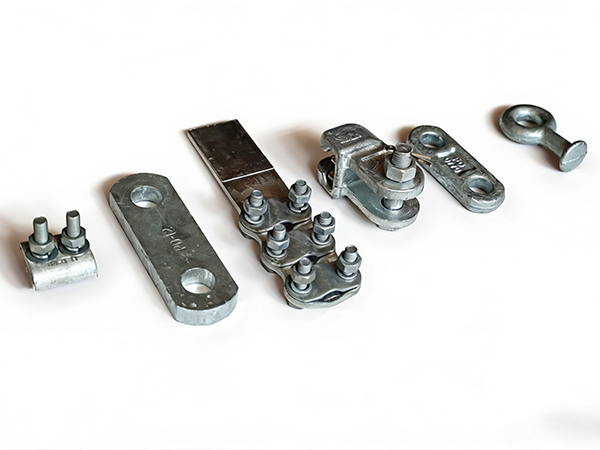
Outdoor power hardware—such as clamps, connectors, bolts, suspension fittings, and strain assemblies—is constantly exposed to harsh environmental conditions. Moisture, oxygen, industrial pollution, ultraviolet radiation, and salt spray can all accelerate rust and corrosion. If not properly controlled, corrosion can weaken mechanical strength, increase electrical resistance, and significantly reduce the service life of transmission and distribution components.
1. Main Causes of Rust and Corrosion
1.1 Moisture and Oxygen Exposure
Water and oxygen are the basic requirements for electrochemical corrosion. In outdoor environments, condensation and rain continuously provide the medium for rust formation on steel components.
1.2 Salt Spray and Coastal Environments
Chloride ions from sea salt are highly aggressive. They penetrate protective coatings and accelerate localized corrosion such as pitting and crevice corrosion.
1.3 Industrial Pollution
Acidic gases such as SO₂ and NOₓ in industrial areas form corrosive compounds when combined with moisture, leading to accelerated metal degradation.
1.4 Temperature and Humidity Cycling
Repeated wet-dry cycles cause expansion and contraction of protective films, making coatings crack and allowing corrosion to progress underneath.
1.5 Dissimilar Metal Contact
When different metals (e.g., aluminum and steel) are in electrical contact, galvanic corrosion occurs, especially in wet environments.
2. Common Forms of Corrosion in Power Hardware
2.1 Uniform Corrosion
Even surface rusting that gradually reduces material thickness and strength.
2.2 Pitting Corrosion
Localized deep corrosion that can penetrate critical sections and cause sudden failure.
2.3 Crevice Corrosion
Occurs in tight gaps such as bolt joints or clamp interfaces where moisture is trapped.
2.4 Galvanic Corrosion
Electrochemical corrosion caused by contact between dissimilar metals in the presence of an electrolyte.
2.5 Stress Corrosion Cracking (SCC)
Cracks develop due to combined mechanical stress and corrosive environment, often without obvious warning signs.
3. Effects of Corrosion on Power Hardware
Reduced Mechanical Strength: Loss of cross-sectional area weakens load-bearing capacity
Increased Electrical Resistance: Leads to overheating at connection points
Loose Connections: Corrosion reduces friction and fastening reliability
Shortened Service Life: Accelerates aging of fittings and conductors
Safety Risks: Severe corrosion may lead to sudden mechanical failure or line drop
4. Rust and Corrosion Prevention Measures
4.1 Hot-Dip Galvanizing Protection
Hot-dip galvanizing provides a durable zinc coating that acts as both a physical barrier and sacrificial anode, significantly improving corrosion resistance in outdoor environments.
4.2 Advanced Surface Coatings
Epoxy coatings, zinc-aluminum coatings, and polymer-based protective layers provide enhanced resistance against moisture, salt, and pollutants.
4.3 Use of Corrosion-Resistant Materials
Select materials such as stainless steel, aluminum alloy, or specially treated steel for harsh environments like coastal or industrial zones.
4.4 Application of Anti-Corrosion Grease
Apply protective grease or compound on bolts, joints, and contact surfaces to block moisture ingress and reduce oxidation.
4.5 Structural Design Optimization
Avoid water retention structures. Ensure proper drainage, ventilation, and smooth surfaces to minimize crevice formation.
4.6 Electrical Isolation Between Dissimilar Metals
Use insulating washers or transition fittings to prevent galvanic corrosion between different metals.
4.7 Regular Cleaning and Maintenance
Remove salt, dust, and pollutants periodically, especially in coastal areas. Freshwater washing can significantly slow corrosion progression.
4.8 Routine Inspection and Monitoring
Use visual inspection, thickness measurement, and thermal imaging to detect early signs of corrosion and overheating.
5. Field Maintenance Recommendations
Replace fittings showing deep rust, pitting, or structural weakening
Reapply protective coatings after mechanical damage or aging
Tighten and inspect bolts regularly to prevent crevice corrosion
Prioritize inspection of coastal, high-humidity, and industrial zones
Record corrosion conditions to improve future material selection
Conclusion
Rust and corrosion of outdoor power hardware are inevitable but controllable. They are driven by environmental exposure, material properties, and structural design. Through the use of protective coatings, corrosion-resistant materials, proper design optimization, and regular maintenance, the lifespan and reliability of power fittings can be significantly improved, ensuring stable and safe operation of power transmission systems.
References
IEC 61284: Overhead lines – Requirements and tests for fittings
ISO 9223: Corrosion of metals and alloys – Atmospheric corrosion classification
IEEE Guide for Overhead Line Maintenance Practices
CIGRÉ Technical Brochures on Corrosion Protection in Power Systems
 Recommended Products
 Contact us
—— Contact:Manager
—— Tel:+86 15631793633
—— Email:960244024@qq.com
—— Url:https://www.dachuan-power.com
—— Address:Liugusi Town, Hejian City, Cangzhou City, Hebei Province, China