
NewsDetails
Corrosion Issues of Power Fittings in Coastal Areas
author:Dachuan time:2026-04-17 16:05:28 Click:66
Corrosion Issues of Power Fittings in Coastal Areas
Power fittings used in overhead transmission and distribution systems are particularly vulnerable in coastal environments. High humidity, salt-laden air, and strong winds accelerate corrosion processes, significantly reducing the service life of components such as clamps, connectors, bolts, and insulator hardware. Addressing corrosion in these areas is essential for ensuring long-term grid reliability and safety.
1. Characteristics of Coastal Corrosion
1.1 High Salt Content in the Atmosphere
Sea spray carries chloride ions that deposit on the surface of metal fittings. These salts are highly conductive and hygroscopic, forming an electrolyte layer that accelerates electrochemical corrosion.
1.2 High Humidity and Condensation
Coastal regions often experience persistent humidity above 70%. Moisture condenses on metal surfaces, providing the necessary medium for corrosion reactions to occur continuously.
1.3 Strong Winds and Salt Spray Deposition
Wind-driven salt particles can travel long distances inland, increasing corrosion risk even several kilometers from the coastline. Wind also causes uneven deposition, leading to localized corrosion.
1.4 Temperature Fluctuations
Frequent temperature changes contribute to condensation cycles, which repeatedly wet and dry the surface, intensifying corrosion processes.
2. Common Types of Corrosion in Power Fittings
2.1 Uniform Corrosion
A general thinning of the metal surface caused by continuous exposure to moisture and salt. This reduces the overall strength of fittings over time.
2.2 Pitting Corrosion
Localized attack that creates small pits or holes. Particularly dangerous because it is difficult to detect and can lead to sudden failure.
2.3 Galvanic Corrosion
Occurs when dissimilar metals (e.g., aluminum conductor and steel fittings) are in electrical contact in the presence of an electrolyte. The more active metal corrodes faster.
2.4 Crevice Corrosion
Happens in confined spaces such as bolt joints or clamp interfaces where moisture is trapped and oxygen supply is limited.
2.5 Stress Corrosion Cracking (SCC)
The combined effect of tensile stress and a corrosive environment can cause cracks to form and propagate, leading to brittle failure.
3. Impact on Power System Performance
Reduced Mechanical Strength: Corroded fittings lose load-bearing capacity
Poor Electrical Conductivity: Increased contact resistance leads to overheating
Higher Maintenance Costs: Frequent repairs and replacements are required
Unexpected Failures: Sudden breakage can cause outages and safety hazards
Shortened Service Life: Equipment lifespan is significantly reduced
4. On-Site Solutions and Preventive Measures
4.1 Use of Corrosion-Resistant Materials
Select materials such as hot-dip galvanized steel, aluminum alloy, or stainless steel with proven resistance to chloride environments. In critical areas, consider composite or polymer-based fittings.
4.2 Protective Coatings and Surface Treatments
Apply anti-corrosion coatings such as zinc plating, epoxy coatings, or specialized marine-grade paints. Multi-layer coating systems provide enhanced protection.
4.3 Regular Cleaning and Maintenance
Periodically clean fittings to remove salt deposits, especially in areas with heavy salt spray. Freshwater washing can significantly slow corrosion.
4.4 Application of Anti-Corrosion Compounds
Use grease or protective compounds on joints, bolts, and contact surfaces to prevent moisture ingress and reduce oxidation.
4.5 Electrical Isolation to Prevent Galvanic Corrosion
Install insulating materials or washers between dissimilar metals to minimize galvanic reactions.
4.6 Sealing of Critical Joints
Seal crevices and joints to prevent water accumulation. Use waterproof sealants where applicable.
4.7 Enhanced Inspection Frequency
Increase inspection intervals in coastal areas. Use visual inspection, thickness measurement, and thermal imaging to detect early-stage corrosion.
4.8 Design Optimization
Avoid designs that trap water or create crevices. Ensure proper drainage and ventilation in fittings and assemblies.
5. Practical Field Recommendations
Replace severely corroded fittings immediately to prevent catastrophic failure
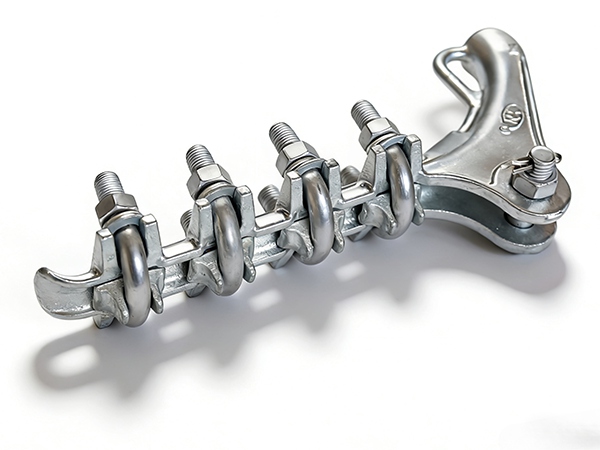
Prioritize inspection of high-stress components such as strain clamps and suspension fittings
Use corrosion-resistant fasteners for retrofitting older lines
Apply additional protection to windward sides where salt exposure is highest
Record corrosion patterns to optimize future material selection and maintenance plans
Conclusion
Corrosion of power fittings in coastal areas is an unavoidable but manageable challenge. It results from the combined effects of salt, moisture, and environmental stress. By selecting appropriate materials, applying protective measures, and implementing rigorous maintenance strategies, utilities can significantly extend the lifespan of power fittings and ensure stable operation of the electrical network in harsh coastal environments.
References
IEC 61284: Overhead lines – Requirements and tests for fittings
ISO 9223: Corrosion of metals and alloys – Classification of corrosivity of atmospheres
IEEE Guide for Maintenance Methods on Overhead Lines
CIGRÉ Technical Brochures on Corrosion in Power Systems
 Recommended Products
 Contact us
—— Contact:Manager
—— Tel:+86 15631793633
—— Email:960244024@qq.com
—— Url:https://www.dachuan-power.com
—— Address:Liugusi Town, Hejian City, Cangzhou City, Hebei Province, China