
NewsDetails
What Is a Pole Clamp for Utility Poles and How Does It Work?
author:Dachuan time:2026-05-03 10:28:15 Click:114
In modern power distribution and telecommunication networks, reliable hardware components are crucial to guarantee safety, durability, and operational efficiency. Among these critical components is the utility pole clamp—a small yet vital device that plays a key role in supporting and securing cables, wires, and equipment to the utility poles used in electrical and communication systems. This article elaborates on what a utility pole clamp is, its working mechanism, and the reasons why it has become an indispensable part of utility infrastructure.
What Is a Pole Clamp?
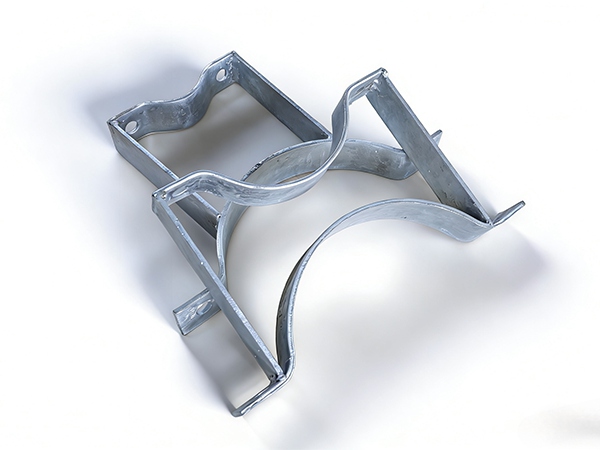
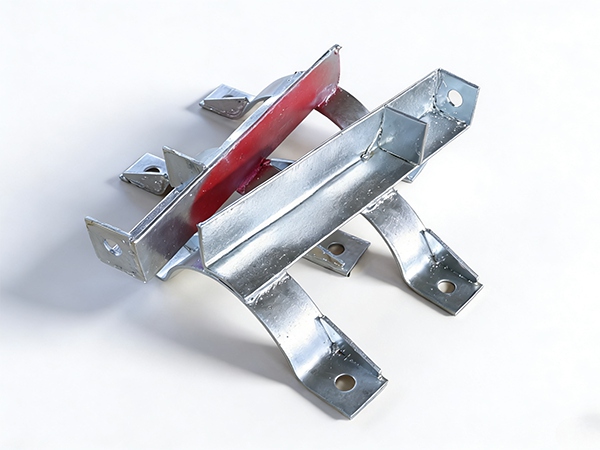
A utility pole clamp is a fastening tool designed to firmly attach various types of equipment—including cables, brackets, transformers, and insulators—to utility poles made of wood, concrete, or steel. It typically comprises metal bands, bolts, and brackets that either wrap around the pole or are fixed directly onto its surface. Pole clamps are extensively used in the following fields:
Power transmission and distribution lines
Telecommunication networks
Street lighting systems
Cable TV and fiber optic installations
They are engineered to endure harsh outdoor conditions, such as strong winds, heavy rain, corrosion, and mechanical stress, ensuring long-term reliability.
Key Components of a Pole Clamp
A standard utility pole clamp generally consists of the following core parts:
Clamp Band or Strap: Wraps around the utility pole to provide the primary support and grip.
Bolts and Nuts: Enable tight fastening and offer adjustability to fit different pole sizes.
Mounting Bracket: Serves as a base to hold cables, wires, or other equipment securely in place.
Protective Coating: Usually made of galvanized or stainless steel to enhance corrosion resistance and extend service life.
These components work in coordination to deliver a stable, long-lasting attachment that can withstand various external pressures.
How Does a Pole Clamp Work?
The working principle of a utility pole clamp is straightforward yet highly effective, relying on mechanical fastening and tension to secure objects firmly to the pole. The process typically involves four key steps:
1. Positioning Around the Pole
The clamp band or strap is wrapped around the circumference of the utility pole at the desired installation height, ensuring it is properly aligned with the equipment to be mounted.
2. Tightening the Fasteners
Bolts and nuts are tightened to generate tension, allowing the clamp to grip the pole firmly without slipping or shifting, even under external stress.
3. Mounting Equipment
Once the clamp is securely fixed to the pole, the attached mounting bracket is used to hold cables, wires, or other devices in the intended position.
4. Load Distribution
The clamp distributes the weight of the mounted equipment evenly around the pole’s surface, preventing localized damage and ensuring overall stability—even when supporting heavy loads or facing harsh environmental conditions.
Types of Pole Clamps
Different application scenarios require different types of pole clamps. Common variants include:
Single Bolt Pole Clamp: Suitable for light-duty applications with relatively small loads.
Double Bolt Pole Clamp: Provides additional strength and stability, making it ideal for heavy-load installations.
Adjustable Pole Clamp: Features flexible design to fit utility poles of various diameters.
Stainless Steel Clamp: Perfect for corrosive environments, such as coastal areas or industrial zones.
Galvanized Steel Clamp: Offers a cost-effective solution with reliable corrosion resistance for general outdoor use.
The selection of the right clamp type depends on factors such as load requirements, environmental conditions, and the material of the utility pole.
Advantages of Using Pole Clamps
Pole clamps offer numerous benefits in utility infrastructure installations:
Strong and secure attachment to ensure equipment stability
Easy installation and maintenance, reducing labor costs
High durability and corrosion resistance for long-term use
Versatility to adapt to various applications and pole types
Cost-effective solution for large-scale infrastructure projects
Their reliability has made them the preferred choice for engineers, contractors, and infrastructure developers worldwide.
Applications in Utility Infrastructure
Pole clamps are essential components across a wide range of industries and infrastructure projects:
Electrical Power Systems: Supporting overhead transmission and distribution lines to ensure stable power supply.
Telecommunications: Securing fiber optic cables, communication wires, and related equipment to telecom poles.
Public Lighting: Mounting streetlights, floodlights, and other lighting fixtures on utility poles.
Cable Management: Organizing and securing overhead cables to maintain order and prevent damage.
Without pole clamps, it would be significantly more challenging to maintain organized, stable, and safe pole-mounted systems in outdoor environments.
Conclusion
The utility pole clamp is a simple yet indispensable component in modern power and telecommunication infrastructure. By securely fastening equipment to utility poles and distributing loads evenly, it ensures the stability, safety, and longevity of outdoor electrical and communication systems. Understanding the working principle and types of pole clamps can help businesses and engineers select the right solution for their specific projects, improving both operational safety and efficiency. Whether used in power distribution networks or telecommunication systems, pole clamps remain a fundamental part of reliable outdoor infrastructure. If you are sourcing pole clamps for your project, choosing high-quality materials and the appropriate design will ensure long-term performance, reduce maintenance costs, and enhance the overall reliability of your infrastructure.
References
GB/T 7714:Design Optimization and Mechanical Performance Test of Utility Pole Clamps for Power Distribution Lines[J]. IEEE Transactions on Power Delivery
MLA:Corrosion Resistance of Galvanized and Stainless Steel Pole Clamps in Outdoor Environments[J]. Journal of Materials Engineering and Performance
APA:Load Distribution Mechanism of Double Bolt Pole Clamps for Heavy-Duty Equipment Mounting[J]. Journal of Structural Engineering
 Recommended Products
 Contact us
—— Contact:Manager
—— Tel:+86 15631793633
—— Email:960244024@qq.com
—— Url:https://www.dachuan-power.com
—— Address:Liugusi Town, Hejian City, Cangzhou City, Hebei Province, China