
NewsDetails
What Is a Pole Clamp and How Does It Work in Power and Telecom Systems
author:Dachuan time:2026-05-12 14:04:20 Click:96
In modern power distribution and telecommunications networks, the stability and safety of infrastructure are of paramount importance. A small yet critical component that contributes to this goal is the pole clamp. Often overlooked, pole clamps play an indispensable role in securing equipment to utility poles, ensuring the reliable operation of overhead systems. This article elaborates on what a pole clamp is, how it functions, and why it is extensively utilized in power and telecommunications installations.
What Is a Pole Clamp?
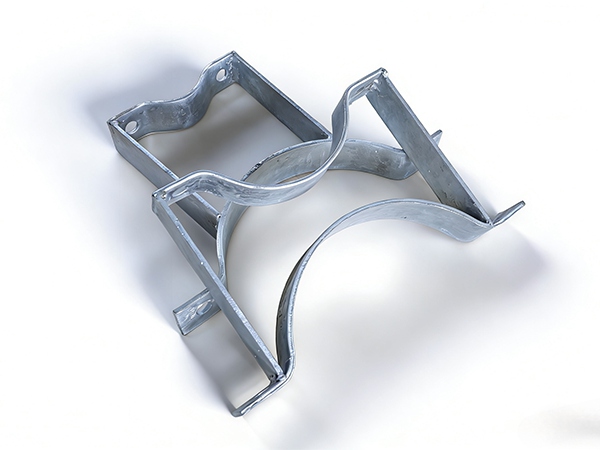
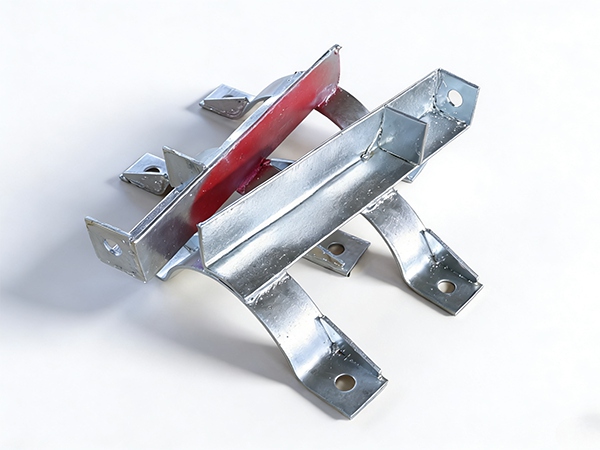
A pole clamp is a mechanical fastening device designed to attach equipment, cables, brackets, or hardware to utility poles. These utility poles are usually made of wood, steel, or concrete and are used to support overhead power lines and telecommunication cables. Pole clamps are engineered to wrap around the pole securely without causing damage to its structure. They serve as a stable mounting point for a variety of accessories, including:
Cross arms
Cable brackets
Insulators
Telecom equipment
Lighting fixtures
In simple terms, a pole clamp acts as a strong “grip” that keeps equipment firmly fixed on a vertical pole.
Key Components of a Pole Clamp
While designs may vary based on specific applications, most pole clamps consist of the following core components:
Clamp body: The main structure that wraps around the utility pole
Bolts or fasteners: Used to tighten the clamp securely onto the pole
Saddle or bracket: Provides support for the attached equipment
Protective lining (optional): Prevents damage to the surface of the utility pole
These components work in tandem to ensure stability, even load distribution, and resistance to environmental stressors.
How Does a Pole Clamp Work?
The working principle of a pole clamp is straightforward yet highly effective, involving four key steps:
Positioning on the pole: The clamp is placed around the utility pole at the desired height and location.
Securing the clamp: Bolts or tightening mechanisms are adjusted to apply pressure, ensuring the clamp grips the pole firmly and securely.
Mounting equipment: Once the clamp is securely fixed, brackets or hardware are attached to the clamp’s dedicated mounting point.
Load support and stabilization: The clamp distributes the weight of the equipment evenly around the pole, preventing slippage or structural damage to the pole.
This design ensures that equipment remains stable even under harsh conditions such as strong winds, vibrations, or heavy cable tension.
Types of Pole Clamps
Different applications call for different clamp designs. Common types of pole clamps include:
1. Adjustable Pole Clamps
Designed to fit a range of pole diameters, making them versatile for various installation scenarios.
2. Heavy-Duty Pole Clamps
Used in high-load environments, such as power transmission lines, where maximum stability is required.
3. Telecom Pole Clamps
Specialized for mounting fiber optic cables and communication equipment, tailored to the unique needs of telecom networks.
4. Stainless Steel Pole Clamps
Offer superior corrosion resistance, making them ideal for outdoor and coastal environments where exposure to moisture and salt is common.
Applications in Power and Telecom Systems
Pole clamps are widely employed in both electrical and communication infrastructure, with key applications in the following areas:
Power Industry
Supporting overhead power line hardware
Mounting insulators and cross arms
Securing distribution equipment
Telecom Industry
Installing fiber optic cable brackets
Supporting base station accessories
Organizing cable routing on utility poles
Street Lighting Systems
Fixing lighting fixtures and control boxes
Ensuring the stability of outdoor lighting infrastructure
Benefits of Using Pole Clamps
Pole clamps offer numerous advantages in industrial applications, including:
Strong mechanical stability to keep equipment secure
Easy installation and maintenance, reducing labor costs
No drilling required, which protects the structural integrity of utility poles
High load-bearing capacity to support heavy equipment
Corrosion-resistant materials suitable for outdoor use
Long service life even in harsh environmental conditions
These benefits make pole clamps the preferred choice for utility companies and contractors around the world.
Materials Used in Pole Clamps
The performance of a pole clamp is largely dependent on the material it is made of. Common materials used include:
Galvanized steel: Offers high strength and is cost-effective, suitable for general applications
Stainless steel: Provides excellent corrosion resistance, ideal for harsh environments
Aluminum alloys: Lightweight yet durable, suitable for applications where weight is a concern
The choice of material depends on the specific environmental conditions and load requirements of the installation.
How to Choose the Right Pole Clamp
When selecting a pole clamp, it is important to consider the following factors:
The diameter and shape of the utility pole
The load capacity required to support the equipment
Environmental conditions (e.g., humidity, salt exposure, temperature fluctuations)
The type of equipment being mounted
The durability and corrosion resistance of the material
Choosing the right pole clamp is crucial to ensuring the long-term safety and performance of the entire power or telecom system.
Conclusion
While a pole clamp may appear to be a small component, it plays a critical role in maintaining the stability and reliability of power and telecommunications infrastructure. By securely fastening equipment to utility poles, pole clamps ensure safe operation, efficient cable management, and long-lasting performance in demanding outdoor environments. As power and communication networks continue to expand globally, the importance of durable, well-designed pole clamps will only grow, making them an essential part of modern infrastructure.
References
GB/T 7714:The Role of Pole Clamps in Modern Power Distribution Networks. Journal of Electrical Infrastructure
MLA:Corrosion-Resistant Materials for Pole Clamps in Coastal Telecom Installations. Journal of Materials Science and Engineering
APA:Design and Performance of Heavy-Duty Pole Clamps for High-Load Applications. IEEE Transactions on Power Delivery
 Recommended Products
 Contact us
—— Contact:Manager
—— Tel:+86 15631793633
—— Email:960244024@qq.com
—— Url:https://www.dachuan-power.com
—— Address:Liugusi Town, Hejian City, Cangzhou City, Hebei Province, China