
NewsDetails
Hot-Dip Galvanizing for Power Line Hardware and Corrosion Protection
author:Dachuan time:2026-06-25 21:10:58 Click:119
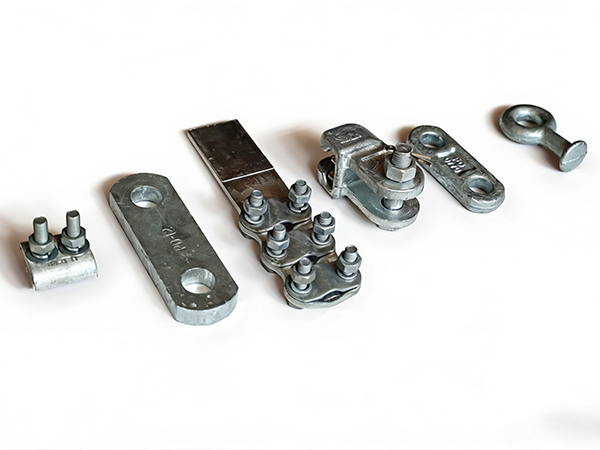
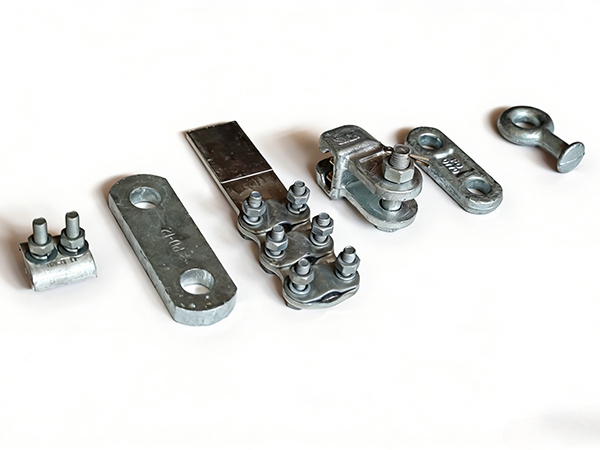
Hot-dip galvanizing provides the primary corrosion protection system for steel power line hardware components exposed to atmospheric, soil, and marine environments throughout their intended service life. This metallurgical coating process, applied by specialized power fitting manufacturers, creates zinc-iron alloy layers bonded to steel substrate that deliver both barrier protection and cathodic sacrifice mechanisms preventing base metal corrosion. Understanding galvanizing process principles, coating specifications, and performance characteristics enables power line engineers to specify appropriate corrosion protection levels for diverse service environments and project requirements.
Galvanizing Process and Coating Formation
The hot-dip galvanizing process immerses cleaned steel components in molten zinc (450-460°C bath temperature) for specified immersion durations that develop alloy layer formation and pure zinc overlay. Surface preparation preceding galvanizing includes degreasing (alkaline cleaning), acid pickling (hydrochloric or sulfuric acid), and flux application (zinc ammonium chloride) that ensure complete surface wetting and uniform coating formation. Insufficient surface preparation causes bare spots, zinc flaking, or poor adhesion that compromises coating protective function.
Coating formation produces layered structure comprising gamma, delta, zeta, and eta phases, with alloy layer thickness determined by steel composition (particularly silicon and phosphorus content), immersion time, and withdrawal speed. Steel chemistry within Sandelin range (0.03-0.12% silicon) produces normal alloy layer growth and bright coating appearance, while reactive steels produce thicker alloy layers with matte gray appearance. Professional galvanizing facilities control process parameters and select appropriate steel grades to achieve consistent coating quality across production lots.
Coating Thickness Specifications and Standards
Galvanizing thickness requirements for power line hardware are specified in ISO 1461, ASTM A123, and project-specific standards that define minimum coating mass per unit area or minimum local thickness values. Standard thickness requirements for steel articles exceeding 6mm thickness specify minimum local thickness of 70 micrometers (500 g/m² coating mass). Thicker coatings (85-100 micrometers) provide enhanced corrosion protection for hardware exposed to aggressive environments including coastal, industrial, or tropical locations.
Coating thickness measurement employs magnetic thickness gauges (non-destructive) or gravimetric methods (destructive) to verify compliance with specification requirements. Statistical sampling plans per ISO 2859 determine measurement frequency and acceptance criteria for production lot verification. Reputable power line hardware suppliers provide coating thickness certificates and material traceability documentation meeting utility quality assurance requirements.
Corrosion Performance and Service Life Prediction
Galvanizing service life depends on zinc coating thickness and environmental corrosion rate, with thicker coatings providing proportionally longer protection in specific atmospheric environments. ISO 9223/9224 corrosion classification systems categorize atmospheric corrosivity (C1 through CX) based on measured zinc corrosion rates, enabling service life estimation for galvanized hardware in specific geographic locations. Rural environments (C2) typically provide 50+ year service life for standard coating thickness, while marine environments (C4-C5) reduce expected service life to 15-25 years.
Cathodic protection mechanism ensures that even when coating is mechanically damaged, surrounding zinc sacrificially corrodes to protect exposed steel substrate, preventing rust initiation at scratch or impact locations. This self-healing characteristic distinguishes galvanizing from barrier-only coating systems where damage exposes unprotected steel to immediate corrosion. Leading hardware manufacturers provide corrosion performance data and service life predictions based on field exposure testing and international corrosion databases.
Quality Control and Inspection Methods
Galvanizing quality control encompasses surface preparation verification, bath chemistry monitoring, coating thickness measurement, and adhesion testing to ensure consistent product quality. Preece test (copper sulfate immersion per ISO 1461) provides rapid assessment of coating continuity and minimum thickness compliance. Visual inspection identifies coating defects including bare spots, zinc lumps, flux inclusions, and weld spatter that require remediation before shipment.
Adhesion evaluation through hammer test (ASTM A123) or bend test verifies coating bond strength to steel substrate, ensuring coating integrity during handling, transportation, and installation. Coating appearance assessment evaluates surface uniformity, color consistency, and freedom from defects that affect both protective function and aesthetic quality. Professional galvanizing suppliers maintain comprehensive quality management systems and provide inspection documentation for project quality records.
References
ISO 1461 - Hot Dip Galvanized Coatings on Fabricated Iron and Steel Articles
ASTM A123 - Standard Specification for Zinc (Hot-Dip Galvanized) Coatings on Iron and Steel Products
ISO 9223 - Corrosion of Metals and Alloys - Corrosivity of Atmospheres
ISO 9224 - Corrosion of Metals and Alloys - Guiding Values for the Corrosivity Categories
ASTM A153 - Standard Specification for Zinc Coating (Hot-Dip) on Iron and Steel Hardware
 Recommended Products
 Contact us
—— Contact:Manager
—— Tel:+86 15631793633
—— Email:960244024@qq.com
—— Url:https://www.dachuan-power.com
—— Address:Liugusi Town, Hejian City, Cangzhou City, Hebei Province, China