
NewsDetails
Dead End Strain Clamp Selection Guide for Utility Engineers
author:Dachuan time:2026-07-05 14:56:19 Click:88
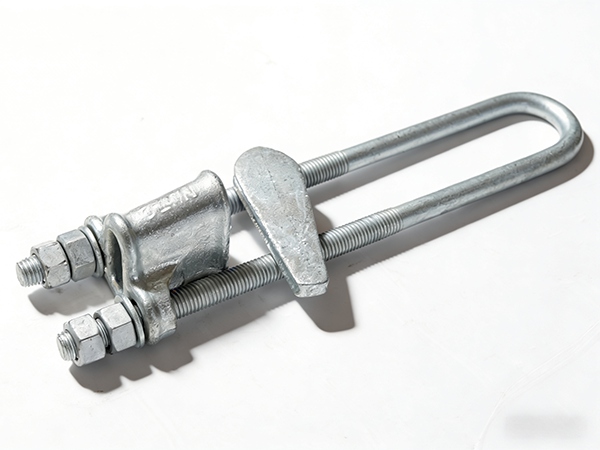
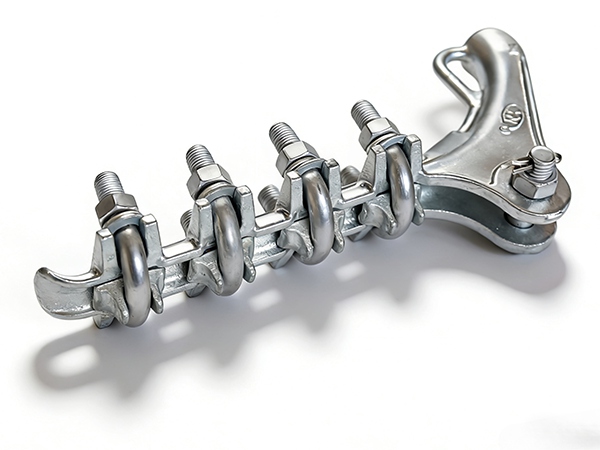
At every point where an overhead conductor terminates, changes direction, or transitions between span sections, a dead end strain clamp is required to grip the conductor and transfer its full tensile load to the support structure. This component carries one of the most safety-critical responsibilities in the entire overhead line hardware system. A clamp that fails under load can result in a dropped conductor, creating an immediate public safety hazard and a costly emergency repair. Understanding the selection criteria for dead end strain clamps is therefore essential for anyone involved in specifying or procuring overhead line hardware.
Function of Dead End Strain Clamps
The dead end strain clamp anchors the conductor at its termination point, gripping the strands firmly while distributing the radial compression force evenly across the conductor cross-section. In suspension spans, the clamp attaches to the insulator string and hangs from the cross arm or pole top. In tension spans — such as at angle poles, line terminations, or river crossings — the clamp handles the full horizontal component of conductor tension, which can exceed several tonnes depending on the conductor size and span length.
Matching Clamps to Conductor Types
The most important specification is conductor compatibility. Dead end clamps are designed for specific conductor ranges — typically defined by the nominal cross-sectional area and the number of aluminum and steel strands in ACSR conductors. Using a clamp rated for a smaller conductor on a larger one results in insufficient grip and potential slippage. Using an oversized clamp may damage the conductor strands or create uneven stress distribution during service.
Common conductor categories include all-aluminum conductor (AAC), aluminum conductor steel reinforced (ACSR), all-aluminum alloy conductor (AAAC), and various copper or aluminum service drop cables. The clamp manufacturer should provide a compatibility chart that maps conductor designations to the appropriate clamp model for easy reference.
Grip Strength and Pull-Out Performance
Grip strength is measured by pulling the conductor through the clamp until it slips. According to IEC 61897, the rated grip strength should be at least 10% to 20% of the rated breaking strength of the conductor. A quality dead end clamp should achieve a grip strength of 90% or more of the conductor's rated breaking force during type testing.
The wedge or compression mechanism inside the clamp determines grip performance. Wedge-type clamps use a removable wedge body to grip the conductor, allowing field removal and re-use. Compression-type clamps are crimped permanently onto the conductor using a hydraulic press or portable compressor tool. Each type has its place — wedge clamps for applications requiring occasional removal, and compression clamps for permanent high-tension installations.
Material and Corrosion Resistance
Dead end clamps are predominantly manufactured from aluminum alloy or malleable cast iron with a galvanized or sherardized finish. Aluminum clamps are lighter and avoid galvanic corrosion when used with aluminum conductors. Cast iron clamps offer higher mechanical strength but require careful corrosion protection when used in harsh environments.
Hot-dip galvanizing to ASTM A153 or equivalent standards provides the standard level of protection for steel components. For coastal or industrial environments, additional protective measures such as zinc-aluminum alloy coatings or epoxy paint may be specified by the utility engineer.
Testing Standards and Quality Assurance
Type testing of dead end strain clamps includes pull-out tests to verify grip strength, corona and RIV tests to assess radio interference, thermal cycling tests to evaluate performance under varying temperatures, and salt fog exposure for corrosion resistance. Routine production testing typically includes visual inspection, dimensional checks, and pull-out tests on a sampling basis.
A reputable manufacturer will maintain detailed records of all tests and provide certificates upon request. Traceability — linking each batch of clamps back to specific raw material heats and production dates — is an important indicator of quality management maturity.
Partnering With a Professional Clamp Manufacturer
When sourcing dead end strain clamps, working with a factory that has integrated production capabilities offers significant advantages. In-house casting, machining, galvanizing, and testing allow tighter process control, faster response times for custom orders, and consistent quality across production runs. OEM and ODM services enable project-specific modifications to standard designs without compromising quality standards.
Final Considerations
Dead end strain clamps are not a component where cost-cutting makes sense. The consequences of a clamp failure far outweigh any savings from using a cheaper, untested product. Specification should always reference recognized international standards, and procurement should prioritize manufacturers with documented quality systems and test capabilities.
References
IEEE 524 — Guide to the Installation of Overhead Transmission Line Conductors
IEC 61284 — Overhead Line Fittings — Requirements and Tests
IEC 61897 — Overhead Line Fittings — Suspension and Strain Clamps
ASTM A153 — Standard Specification for Zinc Coating (Hot-Dip) on Iron and Steel Hardware
We warmly welcome global distributors to partner with us — together we can deliver reliable power line hardware solutions to markets worldwide.
 Recommended Products
 Contact us
—— Contact:Manager
—— Tel:+86 15631793633
—— Email:960244024@qq.com
—— Url:https://www.dachuan-power.com
—— Address:Liugusi Town, Hejian City, Cangzhou City, Hebei Province, China