
NewsDetails
Custom Pole Clamps for OEM Projects in Power and Communication Networks
author:Dachuan time:2026-05-15 14:24:56 Click:55
In power distribution and telecommunications infrastructure, standard components often fail to meet the demands of complex engineering environments. This is where custom pole clamps designed for OEM projects become indispensable. Tailored specifically to match unique installation requirements, these clamps ensure superior performance, enhanced safety, and long-term reliability in field applications. This article elaborates on what custom pole clamps are, why OEM customization is crucial, and how they are applied in modern power and communication networks.
What Are Custom Pole Clamps?
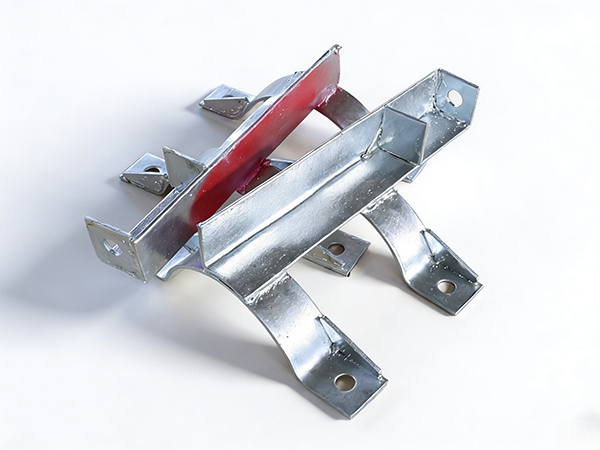
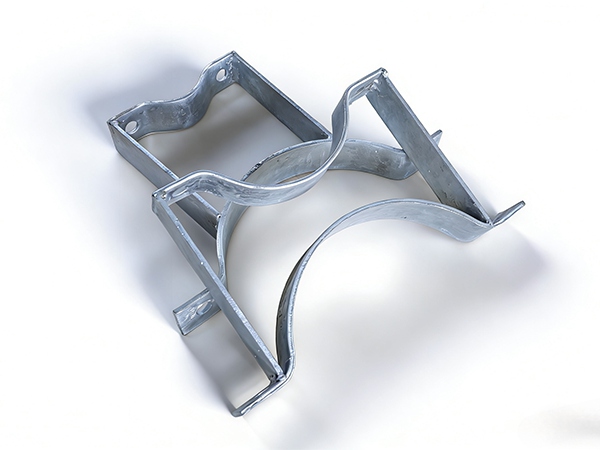
Custom pole clamps are specially engineered fastening devices used to secure equipment to utility poles. Unlike standard off-the-shelf clamps, they are designed in accordance with specific project requirements rather than generic dimensions. Distinct from ordinary clamps, OEM (Original Equipment Manufacturer) pole clamps are customized in the following aspects:
Compatibility with different pole sizes and diameters
Load-bearing capacity tailored to project needs
Selection of materials suitable for specific environments
Surface treatment to enhance durability
Design of mounting structures for specific equipment
This level of customization ensures that the clamp fits perfectly into the application scenario, whether it is used in power transmission lines or telecommunications installations.
Why OEM Customization Matters
Every infrastructure project has unique environmental and structural conditions, and standard clamps may not always deliver optimal performance. OEM customization addresses this problem by offering the following advantages:
1. Perfect Fit for Project Requirements
Custom clamps are designed based on the exact size of the utility pole and the weight of the equipment, eliminating potential installation issues and ensuring a seamless fit.
2. Improved Safety and Stability
A properly engineered custom clamp reduces the risk of loosening, vibration, or structural failure, even in harsh outdoor conditions such as strong winds or extreme temperatures.
3. Better Compatibility
OEM clamps can be seamlessly integrated with cross arms, cable brackets, insulators, or telecom hardware without the need for additional modifications, streamlining the installation process.
4. Cost Efficiency in the Long Run
While customization may involve a higher initial cost, it reduces the need for maintenance, replacements, and downtime, resulting in long-term cost savings for projects.
Key Design Features of Custom Pole Clamps
OEM pole clamps are engineered with high precision to meet specific project needs. Common design features include:
Adjustable or fixed clamp geometry to fit different pole shapes
Reinforced load-bearing structures to support heavy equipment
Anti-corrosion coatings, such as hot-dip galvanizing or stainless steel finishes, to withstand harsh environments
Vibration-resistant designs to prevent loosening during operation
Multiple mounting holes for flexible installation of various equipment
These features ensure that the clamps deliver reliable performance in outdoor environments where wind, rain, and temperature fluctuations pose constant challenges.
Materials Used in OEM Pole Clamps
Material selection is one of the most critical aspects of custom pole clamp design. Common materials used include:
Galvanized Steel
High strength to support heavy loads
Cost-effective, making it suitable for general power and telecom applications
Stainless Steel
Excellent corrosion resistance, ideal for coastal or high-humidity areas
Long service life, reducing replacement frequency
Aluminum Alloy
Lightweight, facilitating easier installation
Suitable for telecom and lightweight equipment applications
Each material is selected based on the specific requirements of the project and the environmental conditions to which the clamp will be exposed.
Applications in Power and Communication Networks
Custom pole clamps are widely used in various infrastructure projects, including:
Power Distribution Systems
Securing cross arms and insulators to utility poles
Supporting overhead line hardware for power transmission
Stabilizing electrical accessories on utility poles
Telecommunications Networks
Mounting fiber optic cable brackets
Supporting 5G base station equipment and related accessories
Organizing aerial cable systems for telecom networks
Smart City Infrastructure
Supporting surveillance cameras for public safety
Mounting IoT (Internet of Things) communication devices
Integrating lighting systems with communication infrastructure
Manufacturing Process of OEM Pole Clamps
The production of OEM pole clamps follows a strict engineering workflow to ensure quality and performance:
Requirement Analysis: A thorough assessment of load requirements, pole type, and environmental conditions to define customization parameters.
Design & Engineering: Creating detailed 2D/3D drawings based on the project’s specific specifications and requirements.
Material Selection: Choosing the appropriate metals and surface coatings to meet performance and environmental needs.
Fabrication: Implementing precision processes such as cutting, stamping, bending, and welding to shape the clamp components.
Surface Treatment: Applying galvanizing, powder coating, or other anti-rust treatments to enhance durability and corrosion resistance.
Quality Testing: Conducting load testing, corrosion resistance checks, and dimensional inspections to ensure compliance with standards.
This rigorous process ensures that every custom pole clamp meets international safety and performance standards.
Benefits of Choosing OEM Pole Clamp Solutions
For contractors and utility companies, OEM pole clamps offer significant advantages:
Tailored engineering to meet the unique needs of each project
Enhanced installation efficiency due to perfect fit and compatibility
Reduced risk of field failure, ensuring project stability
Longer product lifespan, minimizing replacement costs
Compliance with international industry standards and regulations
Flexible design that allows for future upgrades and modifications
These benefits make OEM custom pole clamp solutions the preferred choice for large-scale infrastructure projects.
How to Select the Right OEM Supplier
Choosing a reliable OEM manufacturer is critical to the success of any infrastructure project. Key factors to consider include:
The manufacturer’s engineering and customization capabilities
Quality control systems for materials and production processes
Production capacity and ability to meet project delivery timelines
Industry certifications, such as ISO standards, to ensure quality
Experience in delivering custom solutions for power and telecom projects
After-sales technical support to address installation and maintenance needs
A dependable supplier not only ensures high-quality products but also contributes to the overall stability and success of the project.
Conclusion
Custom pole clamps play a pivotal role in modern power and communication networks, particularly in complex engineering environments where standard off-the-shelf solutions fall short. Through OEM customization, these clamps provide a precise fit, enhanced durability, and improved system reliability, addressing the unique challenges of each project. As global infrastructure continues to expand and become more complex, the demand for high-quality, application-specific pole clamp solutions will keep growing—establishing OEM manufacturing as a key driver in the power and telecommunications industry.
References
GB/T 7714:Custom OEM Pole Clamps: Solutions for Complex Power Infrastructure Projects. Journal of Electrical Engineering
MLA: Material Selection for OEM Pole Clamps in Coastal Power Installations. Journal of Materials Science and Engineering
APA: Design and Performance of Custom Pole Clamps for 5G Telecom Networks. IEEE Transactions on Telecommunications
 Recommended Products
 Contact us
—— Contact:Manager
—— Tel:+86 15631793633
—— Email:960244024@qq.com
—— Url:https://www.dachuan-power.com
—— Address:Liugusi Town, Hejian City, Cangzhou City, Hebei Province, China