
NewsDetails
Power Line Iron Fittings: Design and Application in Transmission Lines
author:Dachuan time:2026-04-17 10:30:47 Click:97
Power Line Iron Fittings: Design and Application in Transmission Lines
Power line iron fittings are essential mechanical components used in overhead transmission systems to connect, support, and protect conductors, insulators, and towers. Their design and application directly influence the structural integrity, electrical performance, and long-term reliability of transmission lines. With increasing demand for high-capacity and long-distance power transmission, the role of iron fittings has become even more critical.
1. Overview of Power Line Iron Fittings
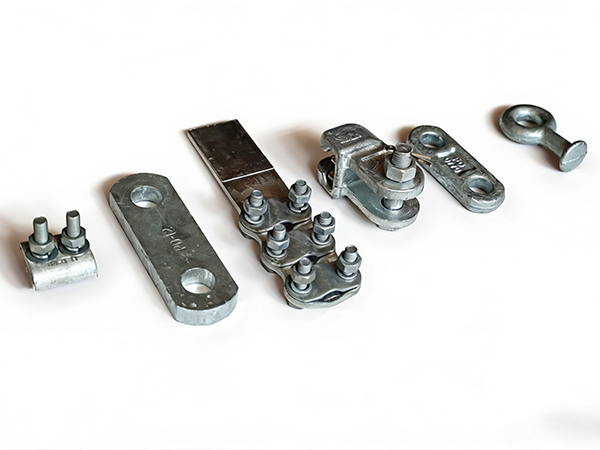
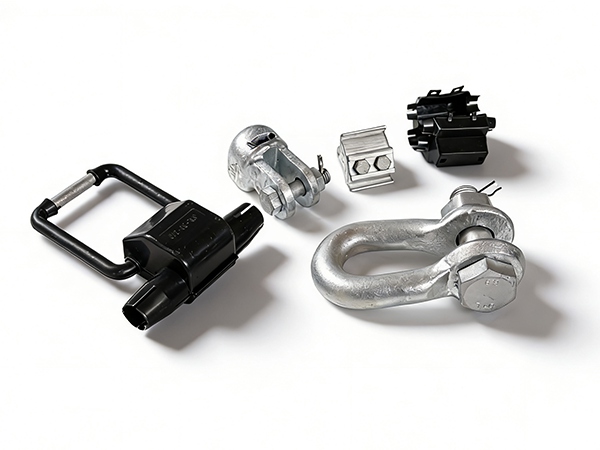
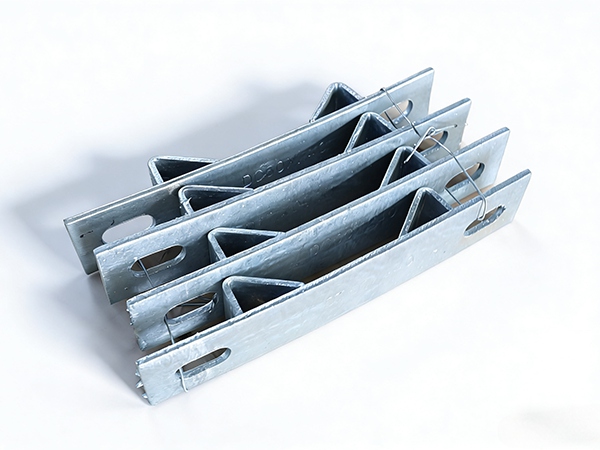
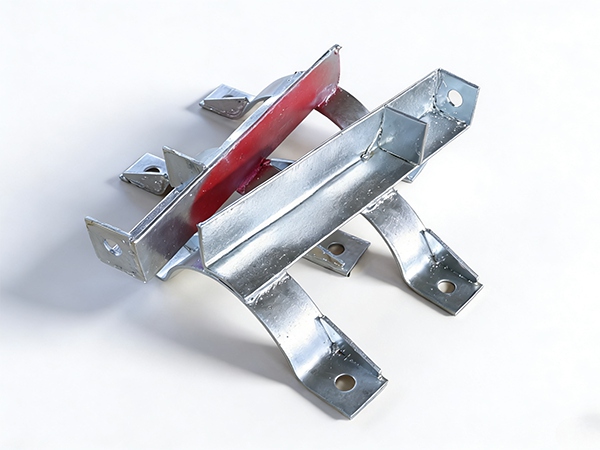
Iron fittings (also known as line hardware or transmission fittings) are typically manufactured from carbon steel, alloy steel, or ductile iron, and are usually protected by hot-dip galvanizing to resist corrosion.
Common types include:
Suspension clamps
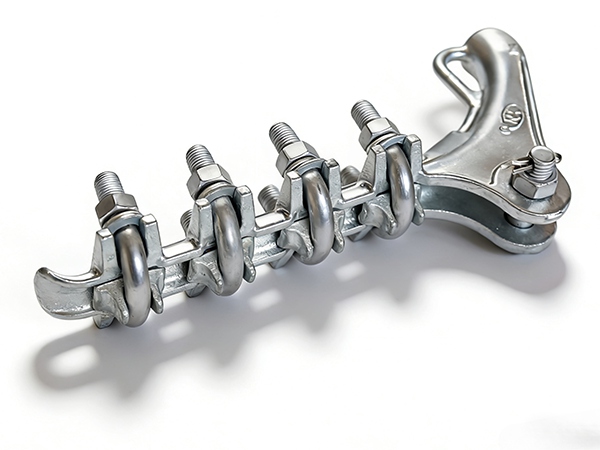
Tension (dead-end) clamps
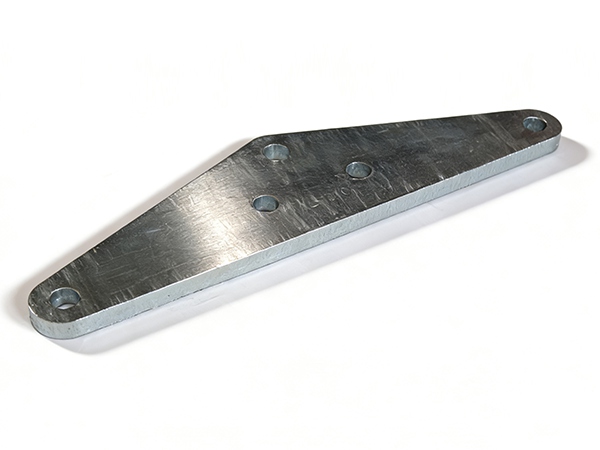
Clevises, shackles, and yoke plates
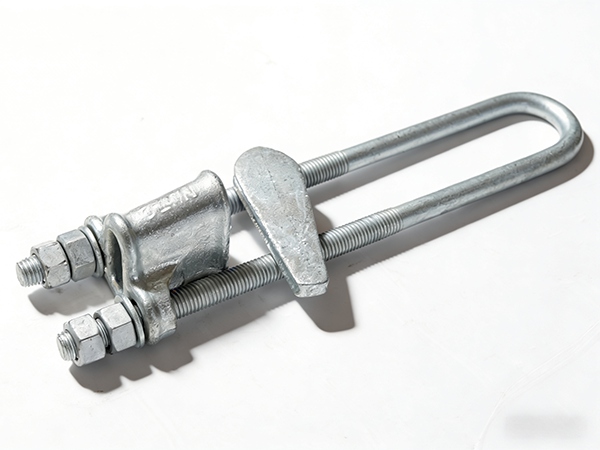
U-bolts, eye bolts, and anchor fittings
Spacers and vibration dampers
Protective fittings such as armor rods and corona rings
These components ensure proper mechanical load transfer and maintain electrical clearances within the transmission system.
2. Design Principles of Iron Fittings
2.1 Mechanical Strength and Safety
Iron fittings must be designed to withstand various loads:
Static loads from conductors and hardware
Dynamic loads caused by wind and vibration
Extreme loads such as ice accumulation or conductor breakage
Design incorporates safety factors (typically 2.5–3.0 or higher) to ensure reliability under worst-case conditions.
2.2 Structural Optimization
Efficient structural design minimizes stress concentration:
Smooth contours and rounded edges reduce fatigue risk
Uniform cross-sections improve load distribution
Reinforced areas at critical stress points enhance durability
Finite Element Analysis (FEA) is often used to refine design and predict performance.
2.3 Material Selection
Material choice is crucial for performance:
Carbon steel: widely used for general fittings due to strength and cost-effectiveness
Alloy steel: used for high-load applications requiring enhanced strength
Ductile iron: suitable for complex shapes and good toughness
Surface protection, typically through galvanization, is essential for corrosion resistance.
2.4 Standardization and Compatibility
Designs must comply with international standards (IEC, ASTM, ANSI)
Interchangeable dimensions ensure compatibility across systems
Standardized fittings simplify installation and maintenance
3. Application in Transmission Lines
3.1 Suspension Systems
Suspension fittings support conductors in straight-line sections:
Suspension clamps hold the conductor while allowing limited movement
Insulator strings are connected through clevises and yoke plates
Designed to accommodate vertical loads and minor dynamic motion
3.2 Tension and Dead-End Systems
Tension fittings are used at line terminations and angle points:
Dead-end clamps secure conductors under high tension
Anchor fittings transfer loads to towers
Must withstand maximum tensile forces without slippage or failure
3.3 Vibration Control
Wind-induced vibration can cause fatigue damage:
Dampers and spacers reduce vibration amplitude
Armor rods protect conductors from wear at clamp نقاط
Proper placement is essential for effectiveness
3.4 Electrical Protection
Some fittings contribute to electrical performance:
Corona rings reduce electric field intensity in high-voltage systems
Arcing horns protect insulators from lightning-induced flashover
Proper design minimizes energy loss and interference
4. Mechanical Performance in Service
4.1 Load-Bearing Capacity
Iron fittings must maintain structural integrity under continuous and peak loads:
Verified through tensile and load testing
Must not deform or fail under specified conditions
4.2 Fatigue Resistance
Long-term exposure to cyclic loads requires high fatigue strength
Surface finish and material quality significantly influence performance
4.3 Corrosion Resistance
Galvanized coatings protect against environmental degradation
Essential in coastal, industrial, and high-humidity regions
4.4 Durability and Service Life
Properly designed fittings can last several decades
Performance depends on material quality, coating, and environmental conditions
5. Installation and Maintenance Considerations
5.1 Installation Requirements
Correct alignment and assembly are critical
Fasteners must be tightened to specified torque
Locking devices must be properly installed
5.2 Inspection and Maintenance
Regular inspection for corrosion, deformation, or loosening
Replacement of damaged or worn components
Monitoring of vibration-prone areas
5.3 Lifecycle Management
Maintain records of installation and maintenance
Optimize replacement schedules based on condition assessment
Upgrade materials or coatings in harsh environments
6. Challenges and Future Trends
6.1 Increasing Load Demands
Higher transmission capacities require stronger and more reliable fittings
6.2 Harsh Environmental Conditions
Need for improved corrosion resistance and weather durability
6.3 Advanced Materials
Growing use of high-strength alloys and composite materials
6.4 Smart Monitoring
Integration of sensors for real-time monitoring of stress and performance
7. Conclusion
Power line iron fittings are indispensable for the safe and efficient operation of transmission lines. Their design must balance mechanical strength, durability, and environmental resistance, while their application must ensure proper load distribution and system stability. With ongoing advancements in materials and engineering technologies, modern iron fittings continue to evolve to meet the increasing demands of global power infrastructure.
References
IEC 61284 – Overhead lines – Requirements and tests for fittings
IEEE Standard 605 – Guide for Design of Substation Rigid-Bus Structures
ASTM A153/A153M – Zinc Coating (Hot-Dip) on Iron and Steel Hardware
CIGRÉ Technical Brochures on Overhead Line Design and Components
ANSI C135 – Standards for Overhead Line Hardware
 Recommended Products
 Contact us
—— Contact:Manager
—— Tel:+86 15631793633
—— Email:960244024@qq.com
—— Url:https://www.dachuan-power.com
—— Address:Liugusi Town, Hejian City, Cangzhou City, Hebei Province, China