
NewsDetails
Fastening Solutions for Power Iron Fittings in Outdoor Environments
author:Dachuan time:2026-04-17 11:26:56 Click:161
Fastening Solutions for Power Iron Fittings in Outdoor Environments
Fastening systems are critical to the performance and reliability of power iron fittings used in overhead transmission and distribution networks. These solutions must ensure secure mechanical connections while withstanding harsh outdoor conditions such as corrosion, temperature variation, wind loads, and vibration. Proper selection, design, and installation of fastening solutions are essential for maintaining structural integrity and long-term operational safety.
1. Overview of Fastening Solutions
Fastening solutions in power systems include:
Bolts, nuts, and washers
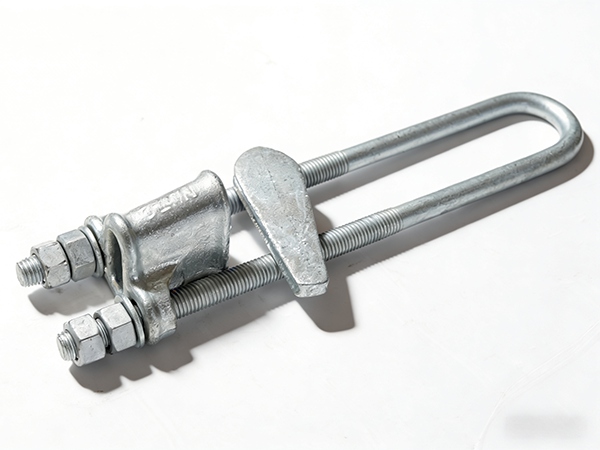
U-bolts and anchor bolts
Studs and threaded rods
Pins, cotter keys, and locking clips
Specialized anti-loosening devices
These components are typically used to assemble fittings such as clamps, cross arms, brackets, and insulator hardware.
2. Key Requirements for Outdoor Fastening Systems
2.1 Mechanical Strength
Fasteners must withstand:
Tensile, shear, and compressive forces
Dynamic loads caused by wind and conductor movement
Installation and maintenance stresses
High-strength grades (e.g., 8.8, 10.9) are commonly used depending on application requirements.
2.2 Corrosion Resistance
Outdoor environments expose fasteners to moisture, salt, and pollutants:
Hot-dip galvanizing is widely used for steel fasteners
Stainless steel provides superior corrosion resistance in aggressive environments
Coating thickness and uniformity are critical for durability
2.3 Anti-Loosening Performance
Vibration and thermal expansion can cause fasteners to loosen:
Use of lock nuts, spring washers, or double-nut systems
Application of mechanical locking devices (e.g., cotter pins)
Thread-locking compounds in specific applications
2.4 Temperature and Environmental Resistance
Fasteners must perform under extreme temperatures without loss of strength
Materials should resist UV exposure and environmental degradation
3. Types of Fastening Solutions
3.1 Standard Bolted Connections
Most common fastening method
Easy to install and replace
Requires proper torque control for reliability
3.2 U-Bolts and Clamping Systems
Used for attaching components to poles or structures
Provide uniform clamping force
Adjustable for different diameters
3.3 Anchor Bolts and Embedded Fasteners
Secure structures to foundations
Designed to resist pull-out and shear forces
Require precise installation and alignment
3.4 Pin and Clip Systems
Used in insulator strings and articulated connections
Allow movement while maintaining secure attachment
Easy to install and remove
3.5 Specialized Anti-Loosening Fasteners
Lock nuts, nylon-insert nuts, and wedge-lock washers
Designed for high-vibration environments
Improve long-term connection stability
4. Material Selection
4.1 Carbon Steel
High strength and cost-effective
Requires galvanizing for corrosion protection
4.2 Alloy Steel
Enhanced mechanical properties
Used in high-load or critical applications
4.3 Stainless Steel
Excellent corrosion resistance
Suitable for coastal or industrial environments
Higher cost but lower maintenance
4.4 Coated Fasteners
Zinc-coated or hot-dip galvanized
May include additional protective layers for extreme conditions
5. Installation Best Practices
5.1 Torque Control
Apply specified torque values to ensure proper clamping force
Avoid under-tightening (risk of loosening) and over-tightening (risk of damage)
5.2 Thread Engagement
Ensure full thread engagement for maximum strength
Avoid cross-threading or damaged threads
5.3 Alignment and Fit
Ensure proper alignment of connected components
Prevent eccentric loading and uneven stress distribution
5.4 Use of Locking Devices
Install locking mechanisms as specified
Verify proper engagement after installation
6. Performance in Outdoor Environments
6.1 Corrosion Resistance
Galvanized coatings provide long-term protection
Regular inspection ensures coating integrity
6.2 Vibration Resistance
Proper fastening design reduces loosening under dynamic loads
Use of dampers and locking devices enhances performance
6.3 Durability and Service Life
High-quality materials and coatings extend service life
Proper installation reduces maintenance requirements
7. Maintenance and Inspection
7.1 Routine Inspection
Check for loosening, corrosion, or damage
Inspect critical connections more frequently
7.2 Maintenance Actions
Re-tighten fasteners as needed
Replace corroded or damaged components
Reapply protective coatings if necessary
7.3 Lifecycle Management
Track installation and maintenance history
Plan replacement based on condition and environment
8. Challenges and Solutions
8.1 Corrosion in Harsh Environments
Solution: Use stainless steel or enhanced coatings
8.2 Loosening Due to Vibration
Solution: Apply anti-loosening devices and proper torque
8.3 Installation Errors
Solution: Provide training and use calibrated tools
8.4 Material Degradation
Solution: Select appropriate materials and perform regular inspections
9. Conclusion
Fastening solutions for power iron fittings in outdoor environments must balance mechanical strength, corrosion resistance, and long-term stability. By selecting appropriate materials, applying proper installation techniques, and implementing effective maintenance strategies, these fastening systems can ensure reliable performance under demanding conditions. As power infrastructure continues to evolve, advanced fastening technologies will play an increasingly important role in enhancing system durability and safety.
References
ISO 898-1 – Mechanical properties of fasteners made of carbon steel and alloy steel
ASTM A153/A153M – Zinc Coating (Hot-Dip) on Iron and Steel Hardware
ISO 1461 – Hot-dip galvanized coatings on fabricated iron and steel articles
IEC 61284 – Overhead lines – Requirements and tests for fittings
ANSI C135 – Standards for Overhead Line Hardware
 Recommended Products
 Contact us
—— Contact:Manager
—— Tel:+86 15631793633
—— Email:960244024@qq.com
—— Url:https://www.dachuan-power.com
—— Address:Liugusi Town, Hejian City, Cangzhou City, Hebei Province, China